Makara Sankranti – Significance, Spirituality & Sacred Traditions
Makara Sankranti – Significance, Spirituality & Sacred Traditions
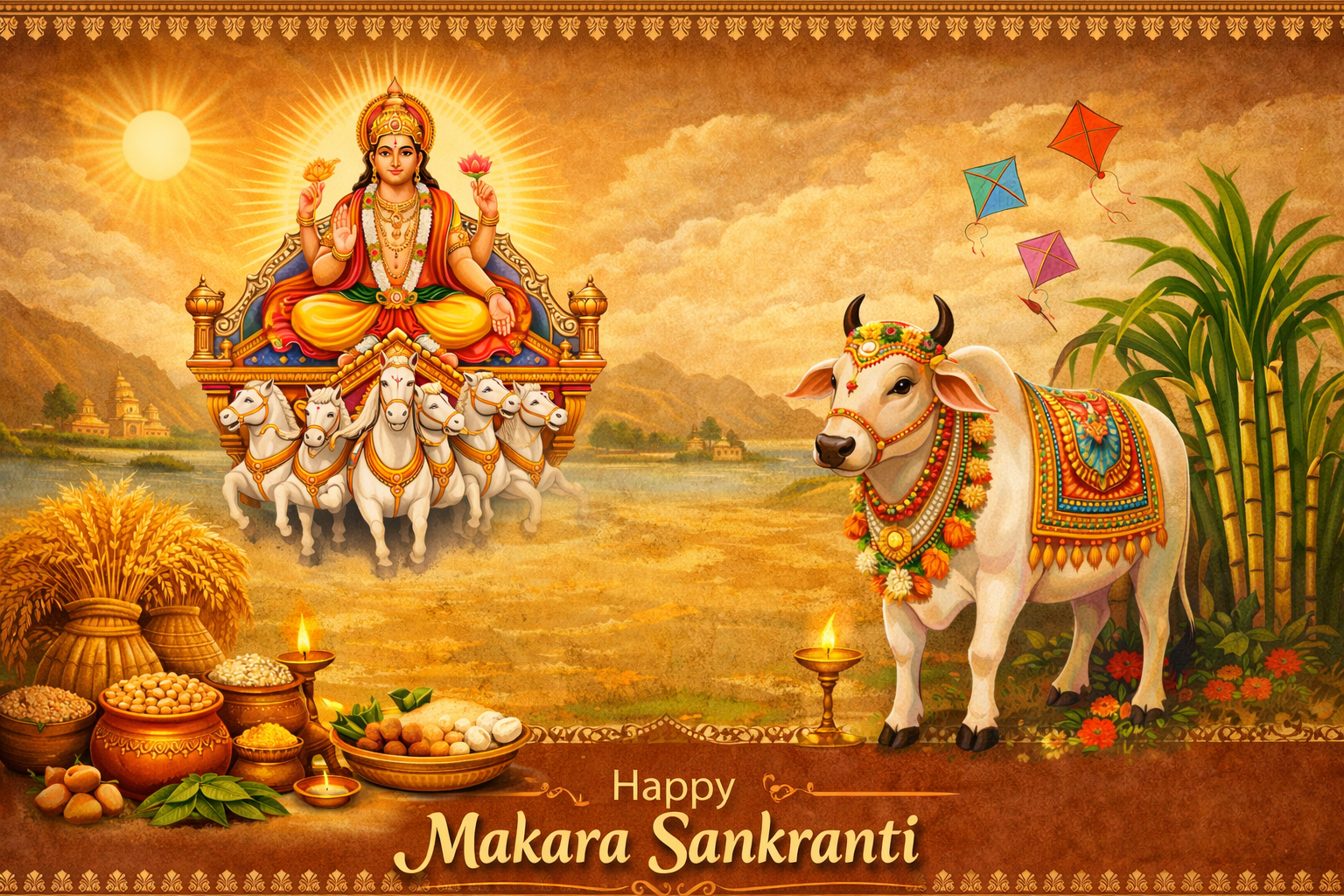
Makara Sankranti is one of the most auspicious and spiritually significant festivals in Sanatana Dharma. It marks the sacred transition of the Sun into Makara Rashi (Capricorn) and the beginning of Uttarayana, the divine northward journey of the Sun. This celestial movement symbolizes the victory of light over darkness, knowledge over ignorance, and positivity over negativity. Unlike most Hindu festivals that follow the lunar calendar, Makara Sankranti is determined by the solar movement and is dedicated to Surya Bhagavan, the source of life, energy, and consciousness.
The Vedas glorify the Sun as the very soul of the universe:
सूर्य आत्मा जगतस्तस्थुषश्च।
(Rigveda)
Meaning: The Sun is the soul of all moving and non-moving beings.
The arrival of Uttarayana during Makara Sankranti is regarded as extremely sacred for spiritual practices, pujas, charity, and vows. Scriptures praise this period with the declaration:
उत्तरायणं पुण्यकालं दक्षिणायनमधमम्।
Meaning: Uttarayana is an auspicious and sacred period, while Dakshinayana is comparatively less sacred. It is believed that Bhishma Pitamaha chose Uttarayana to leave his mortal body, highlighting the profound spiritual power of this time.
Makara Sankranti is also celebrated as a harvest festival, expressing gratitude to Mother Earth, farmers, cattle, and nature. As freshly harvested crops fill homes and granaries overflow, families rejoice in abundance and prosperity. In South India, cattle are worshipped as Gomata, acknowledging their vital role in agriculture and human sustenance.
Charity performed on Makara Sankranti is believed to yield immense spiritual merit. The scriptures proclaim:
तिलदानं महापुण्यं मकरस्थे दिवाकरे।
Meaning: Offering sesame seeds in charity when the Sun is in Makara brings great spiritual merit. Devotees traditionally donate sesame, jaggery, grains, clothes, and perform Gopuja, considering these acts highly auspicious.
Food prepared on this sacred day holds deep symbolic value. Dishes made with sesame and jaggery represent warmth, unity, and sweetness in relationships, while offerings like Ellu-Bella and Pongal signify abundance and harmony. The Vedic wisdom beautifully declares:
अन्नं ब्रह्मेति व्यजानात्।
Meaning: Food itself is Brahman, the Divine.
The rituals of Makara Sankranti begin with an early morning holy bath, followed by Surya Arghya, the offering of water to Surya Bhagavan. Devotees perform Gopuja and Pitru Tarpana, visit temples, participate in homas, and engage in community prayers and seva, purifying the body, mind, and soul.
Makara Sankranti imparts a timeless spiritual message—to move toward light and positivity, live with gratitude and generosity, maintain sweetness in speech and relationships, and respect nature, cows, and farmers. The festival culminates with a universal prayer for peace and well-being:
सर्वे भवन्तु सुखिनः
सर्वे सन्तु निरामयाः।
सर्वे भद्राणि पश्यन्तु
मा कश्चिद्दुःखभाग्भवेत्॥
Meaning: May all beings be happy, healthy, and free from sorrow.
Celebrate Makara Sankranti by performing sacred pujas, Gopuja, and homams with experienced Vedic priests through Gopuja, and receive divine blessings for prosperity, peace, and spiritual upliftment.
Book Pujas Online: www.gopuja.com
Contact for Horoscope & Puja Booking: 6364375041